
Every day, millions of folks check the weather forecast before going out. More and more, people also check the Air Quality Index, or AQI, along with the weather. But what’s an air quality index, and why is it important? The AQI is basically a user-friendly tool that lets you know whether the air is clean or polluted and how it can affect your health.
This article covers the AQI and its calculation, and also gives tips on how to interpret the colors and numbers correctly.
What Is Air Quality Index?
So, what is air quality index exactly? It is an easy-to-understand numerical indicator of environmental contamination. Instead of using the language of the data, the AQI converts pollution data into a scale that is represented by numbers and colors. This is done so that everyone can quickly understand the safety of the air.
The range of the conventional AQI scale is 0 to 500. The high end denotes poor air with modest health hazards, whereas the low end denotes healthy air. The
What Does Air Quality Index Measure?
The AQI indicates the level of harmful substances, which are contaminants in the air, also known as air quality parameters. These pollutants are harmful to our health.
Common air quality parameters include:
- PM2.5
- PM10 (slightly larger particles)
- Ozone
- Nitrogen dioxide
- Sulfur dioxide
- Carbon monoxide
Moreover, VOC air quality (volatile organic compounds) is sometimes checked in the same way as other pollutants. VOC is that part of fuel, paint, and chemical products that, once released, can be inhaled and even found indoors in a lesser concentration.
The pollutants are measured individually, but the air pollutant that constitutes the highest risk is the one that sets the AQI value at any particular location.
Air Quality Levels

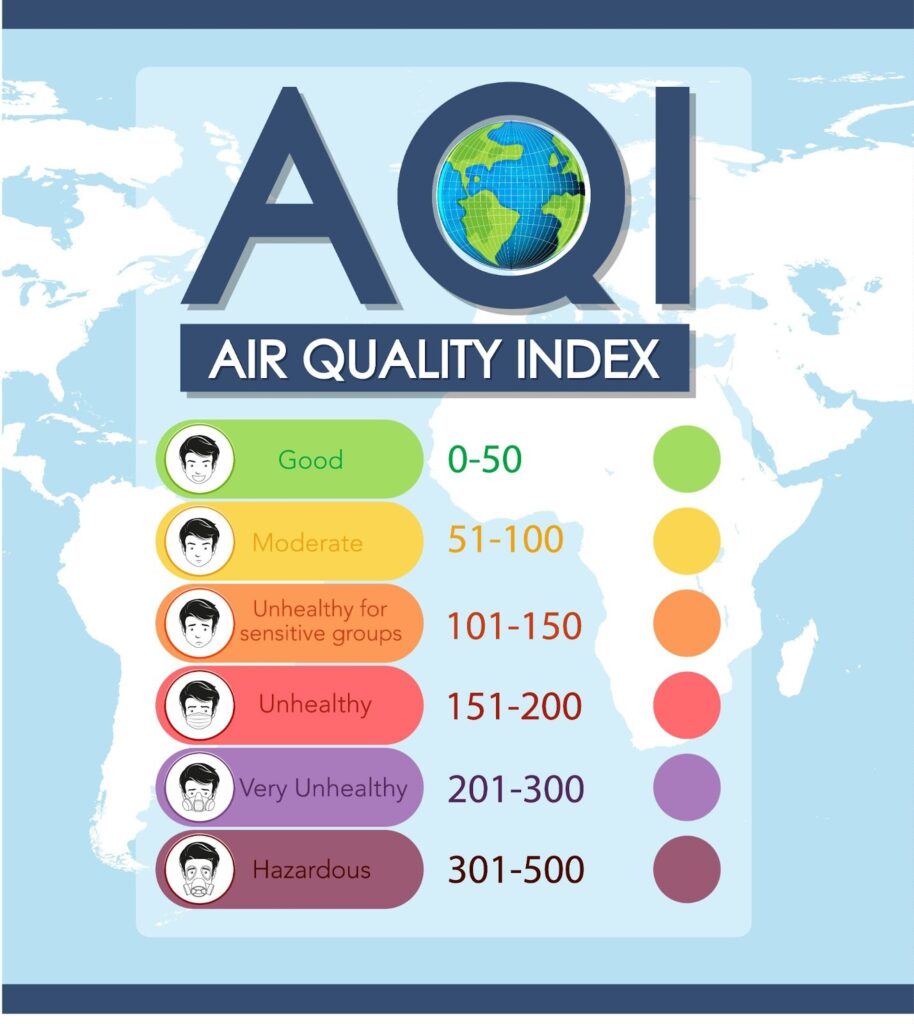
The AQI scale is divided into different air quality level categories for a better understanding by most people. The health effects of air pollution are the common factor that each of the air quality levels indicates.
Here’s a simple breakdown:
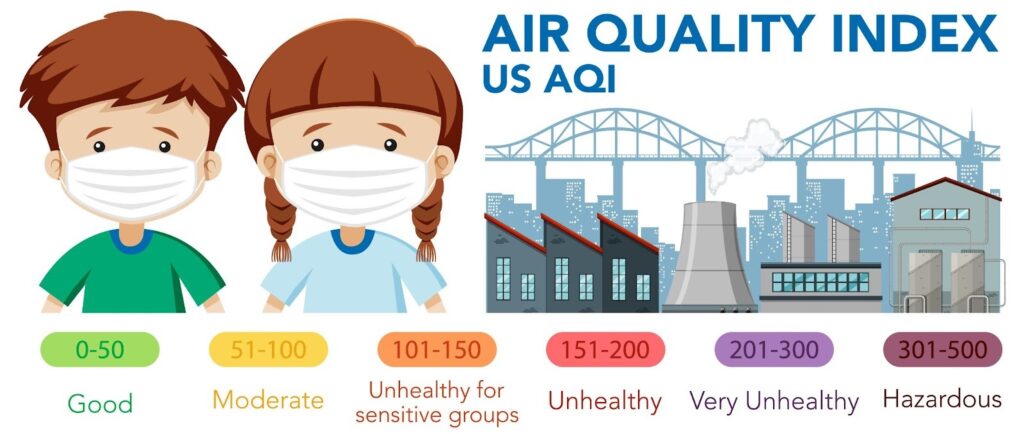
- 0–50: Good air quality
- 51–100: Moderate
- 101–150: Unhealthy for sensitive groups
- 151–200: Unhealthy
- 201–300: Very unhealthy
- 301–500: Hazardous
Basically, when the air quality index or AQI exceeds 100, it is already harmful to health, especially for vulnerable people like children, elderly people, and those suffering from heart or lung diseases.
What Do Air Quality Numbers Mean?
Interpreting outdoor air quality index numbers will allow you to plan your outdoor activities accordingly. It means that the lower the number, the more you can go outside and enjoy various activities without worrying about the health hazard. On the other hand, a high index number indicates that it is best to stay inside, ventilate the air, and keep the doors closed, etc.
For example:
- AQI 40 means clean air
- AQI 120 means sensitive people should limit outdoor time
- AQI 200 means everyone should reduce exposure
- AQI 350 means the air is dangerous for all people
The higher the number, the greater the health risk.
Air Quality Colors Meaning
Besides using numbers, the AQI also employs color codes to provide immediate visual warnings. Learning air quality colors meaning lets people at a glance get the air condition status and understand it well.
- Green usually means good air
- Yellow means the air is okay, but not perfect
- Red means the air can be unhealthy
- Purple implies extremely hazardous air.
These colors are often shown on weather apps and news reports to help people act quickly.
How Is the AQI Measured?
Air quality is measured using monitoring stations placed in cities and towns. These stations collect air samples and measure pollution levels throughout the day. Sensors track air quality PM2.5, gases, and other pollutants.
The collected data is compared to health-based standards. A formula converts this data into an AQI number that reflects the worst pollutant at that time.
Final Thoughts
Knowing what is air quality index will make the problem of air pollution less daunting and more manageable. It is one of the most effective tools in the fight against air pollution because besides showing the pollution level, it spells out the health risks and helps people decide when to go out or when to stay in.
Visit AQISCANR to check and determine air quality more accurately and efficiently.